
Learn to build and manage the networks organizations run on. Earn an Associate in Specialized Technology (AST) degree in Information Technology Systems – Network Administration in 18 months, with hands-on training in computer hardware, networking, servers, Linux, Cisco and cloud technologies.
Fill out the form, and our admissions team will contact you about the Network Administration program.
Learn to build and manage the networks organizations run on. Earn an Associate in Specialized Technology (AST) degree in Information Technology Systems – Network Administration in 18 months, with hands-on training in computer hardware, networking, servers, Linux, Cisco and cloud technologies.
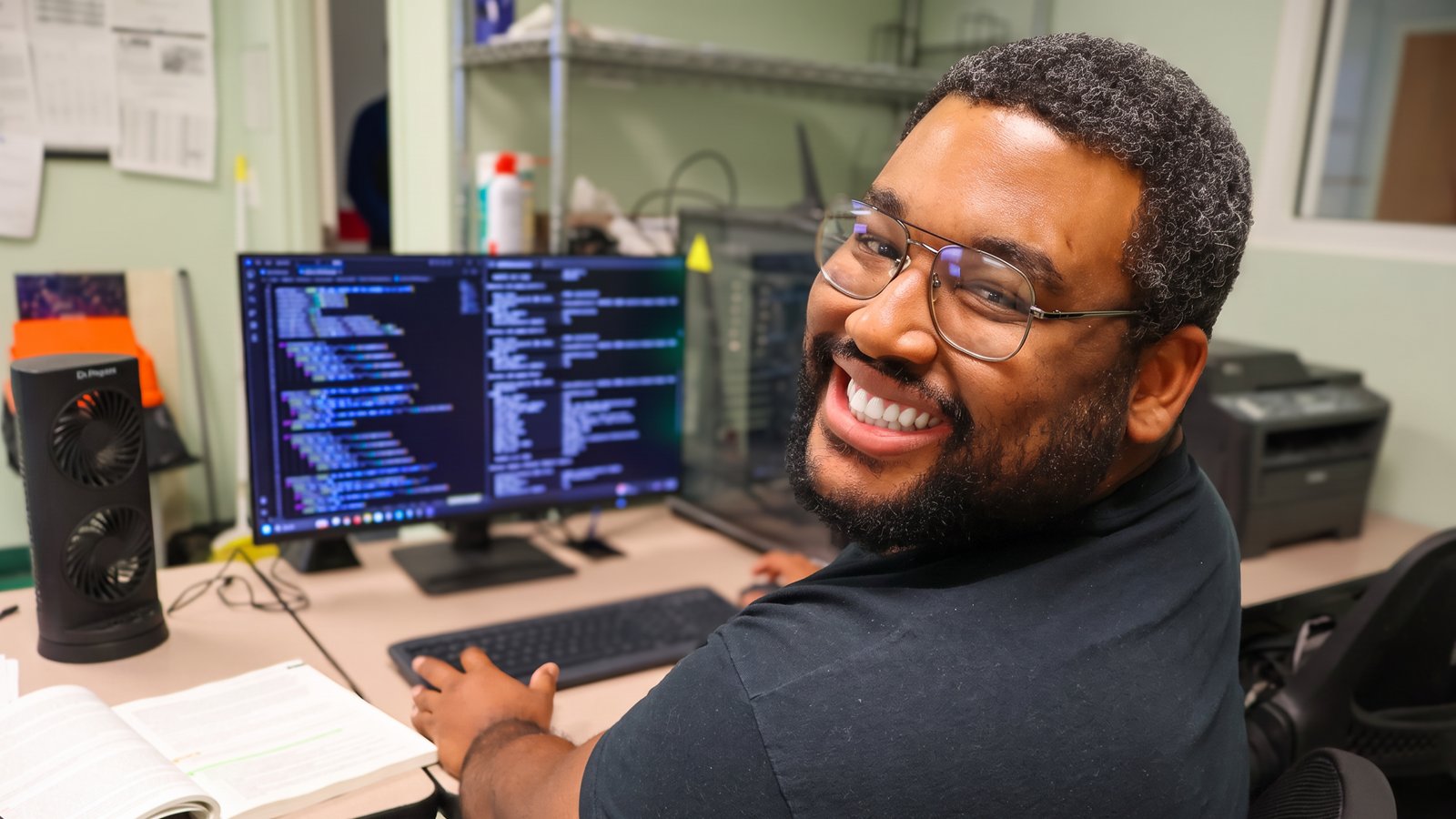
The Information Technology Systems – Network Administration program prepares graduates for entry-level positions in a variety of business and technical environments, such as:
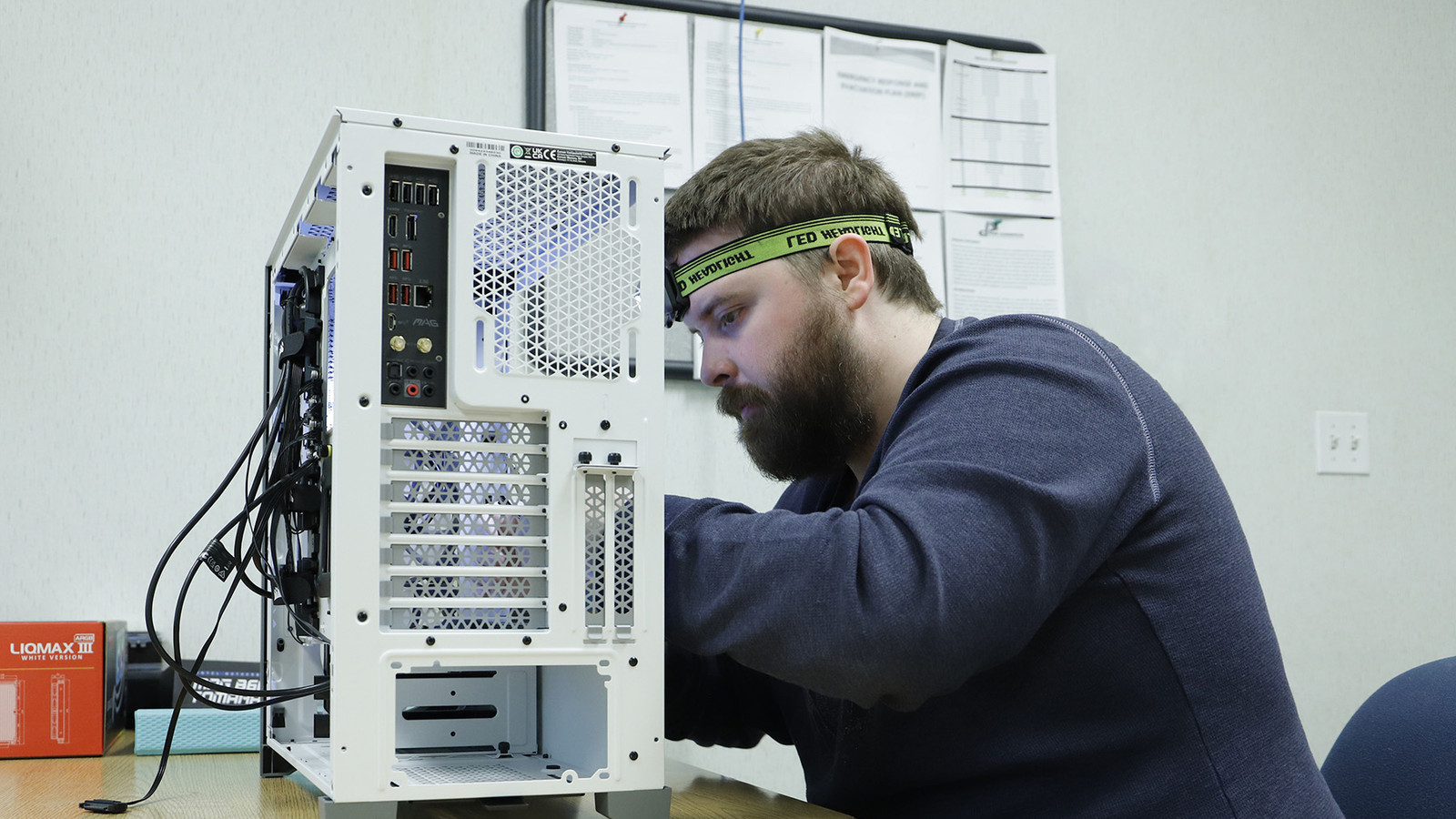
Network administration is learned by doing. Students receive a laptop, and hands-on hardware training uses school-owned equipment in our dedicated hardware lab. In labs throughout the program, you’ll create virtual machines, configure Linux network services, and set up and troubleshoot Cisco network devices and wireless access points yourself.
Work hands-on with computer hardware and learn how desktop operating systems such as Windows, macOS and Linux manage processes, memory, storage and files.
Learn how networks are designed, connected and troubleshot: networking models, topologies, protocols, IP addressing, routing and switching, and LAN technologies such as the OSI model and 802.3 Ethernet.
Create and manage virtual machines, templates, clones, snapshots, virtual networks and virtual storage using VMware vSphere and Microsoft Hyper-V.
Configure, manage and troubleshoot network services on Linux systems, including firewalls, DNS, web, email and file-sharing services, remote access and network monitoring.
Install, configure and troubleshoot network devices with Cisco’s command-line interface, working with IPv4 and IPv6 addressing and subnetting, VLANs and trunking, OSPF routing, access control lists and an introduction to network automation.
Administer servers, storage, backups and disaster recovery with an emphasis on troubleshooting, then design and manage larger business networks using SD-WAN, SD-Access, Quality of Service and network automation.
Learn cloud delivery and deployment models and cloud security principles such as the Shared Responsibility Model, and design, secure and troubleshoot Wi-Fi networks using RF fundamentals, IEEE 802.11 standards and site survey basics.
Network Security I introduces protecting network communications and DNS, defending against denial-of-service attacks, hardening an organization’s security posture and choosing appropriate cryptographic solutions.
Write structured programs, design and manage relational databases with SQL, apply the ITIL 4 framework for IT service delivery, and study project management.
An introductory course in your fifth quarter explains how artificial intelligence and machine learning are used in real-world applications, including predictive modeling, computer vision and natural language processing, and the ethical considerations that come with them. It builds a foundational understanding of AI and machine learning; it is not training to become an AI engineer or machine-learning specialist.
Technical math, computer applications, oral and technical communication, human relations, workplace ethics and career development prepare you to work with users, teams and employers.
Each quarter builds on the last, from IT and networking fundamentals to advanced network administration and your externship.
Total: 1,550 instructional hours and 105 quarter credits. Students must earn a grade of C or better in each core networking and security course to pass. The listing of quarter credits is not meant to imply that credits will transfer to another school. Transfer decisions are made by the receiving school.
The program includes the cost of two CompTIA exams. CompTIA A+ requires two exams, Core 1 and Core 2.
Passing an exam and earning a certification are not guaranteed. CompTIA awards certifications to candidates who complete its certification requirements.
Your sixth and final quarter is a 360-hour, 12-credit externship: supervised, practical, hands-on work experience in a professional information technology environment. You’ll apply your skills in areas such as networking, software, hardware, security and database management while developing professional workplace skills.
Your externship is evaluated on documented learning outcomes and your performance in the work setting. To begin it, you must successfully complete all core classes and have a 2.0 GPA.
Classes are scheduled Monday through Thursday, any time from 8:00 a.m. to 4:30 p.m., in person on our Washington, PA campus. Externship sites may require attendance on Fridays as well.
Want to know when the next class begins? Call 724-222-5330 or request information.
Visit our Washington, PA campus.
Tour our campus, meet our team and ask your questions in person. Request information or call us, and we’ll set up your visit.
An Associate in Specialized Technology (AST) degree in Information Technology Systems – Network Administration. The program takes 18 months and includes 1,550 hours and 105 quarter credits.
Financial aid is available for those who qualify. Learn about financial aid or talk with our admissions team.
Request information or call 724-222-5330. Our admissions team will answer your questions and explain the next steps. Ready to apply? Apply online.
Your career journey doesn’t end at graduation. Penn Commercial’s Career Services team offers job placement assistance to graduates throughout their careers, helping them explore employment opportunities and take their next steps in the workforce.
Employment is not guaranteed.
Penn Commercial’s campus in Washington, PA serves students from communities throughout southwestern Pennsylvania and surrounding areas.
Cities and towns in southwestern Pennsylvania: Pittsburgh Washington Claysville Taylorstown East Finley West Finley Prosperity Wind Ridge Nineveh Waynesburg Dunns Station Jefferson Carmichaels Rices Landing Millsboro Fredericktown Vestaburg Marianna Amity Laboratory California Belle Vernon Charleroi Donora Monongahela Bentleyville Cokeburg Eighty Four Glyde South Strabane North Strabane Wylandville Wolfdale Arden Mapletown Greensboro Dilliner Davistown Bobtown Spraggs Holbrook Woodruff Sycamore Clarksville Ronco McClellandtown Cardale Smock Grindstone Brownsville Meadowlands Avella Woodrow Houston Canonsburg Hendersonville McMurray Finleyville Venetia South Park Bethel Park Upper St Clair Mt Lebanon Cecil Atlasburg McDonald Bulger Burgettstown Oakdale Imperial Cuddy Bridgeville Nevillewood Carnegie Green Tree Dormont Castle Shannon Brentwood Pleasant Hills Jefferson Hills Clairton McKeesport West Mifflin Thompsonville Muse Peters Township Hickory Midway Gastonville Presto Noblestown Broughton Whitehall Courtney New Eagle Ginger Hill Glyde Scenery Hill Meadowlands Rea Joffre Rennerdale Eldersville Crafton McKees Rocks Kennedy Stowe Moon Coraopolis Mt Oliver Baldwin Elrama Webster Monessen Uniontown Garards Fort Wiley Ronco New Freeport Aleppo Mt Carmel Graysville Rogersville Mather Crucible Luzerne Williamstown Brier Hill Perryopolis Fayette Ciry Stockdale Scott Township Ingram Robinson Frankfort Springs West Alexander
Cities and towns in north West Virginia: Wheeling Weirton Arnold Rockdale Wellsburg Bethany West Liberty Triadelphia Valley Grove Eden Clinton Overbrook Allendale Sherrard Moundsville New Vrindaban Dallas Follansbee New Cumberland New Manchester Sun Valley